Du Guesclin
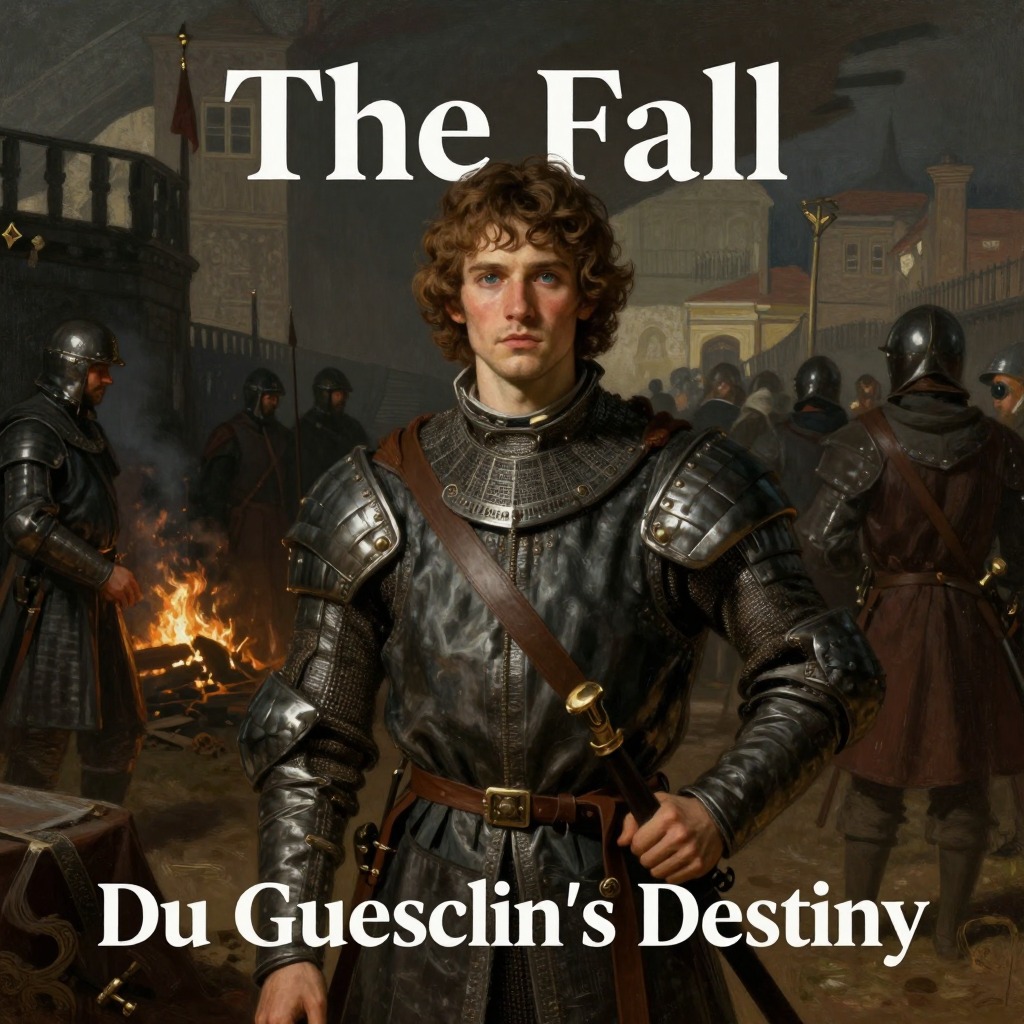
Du Guesclin appears in Jean-Baptiste Clamence's narrative as a young Frenchman interned with him in a prison camp near Tripoli during World War II. He is described as a "Du Guesclin type"—a reference to the medieval French constable Bertrand du Guesclin, suggesting a chivalric, almost archaic faith and a stubborn, melancholy heroism. Having crossed from France into Spain to fight, he was interned by the Catholic general Franco, and the experience of seeing the chick-peas "blessed by Rome" in the Francoist camps had plunged him into a profound melancholy. Neither the African sky nor the camp's enforced leisure could distract him from this sorrow, and his reflections, combined with the brutal sun, had somewhat unhinged him.
The Election as Pope
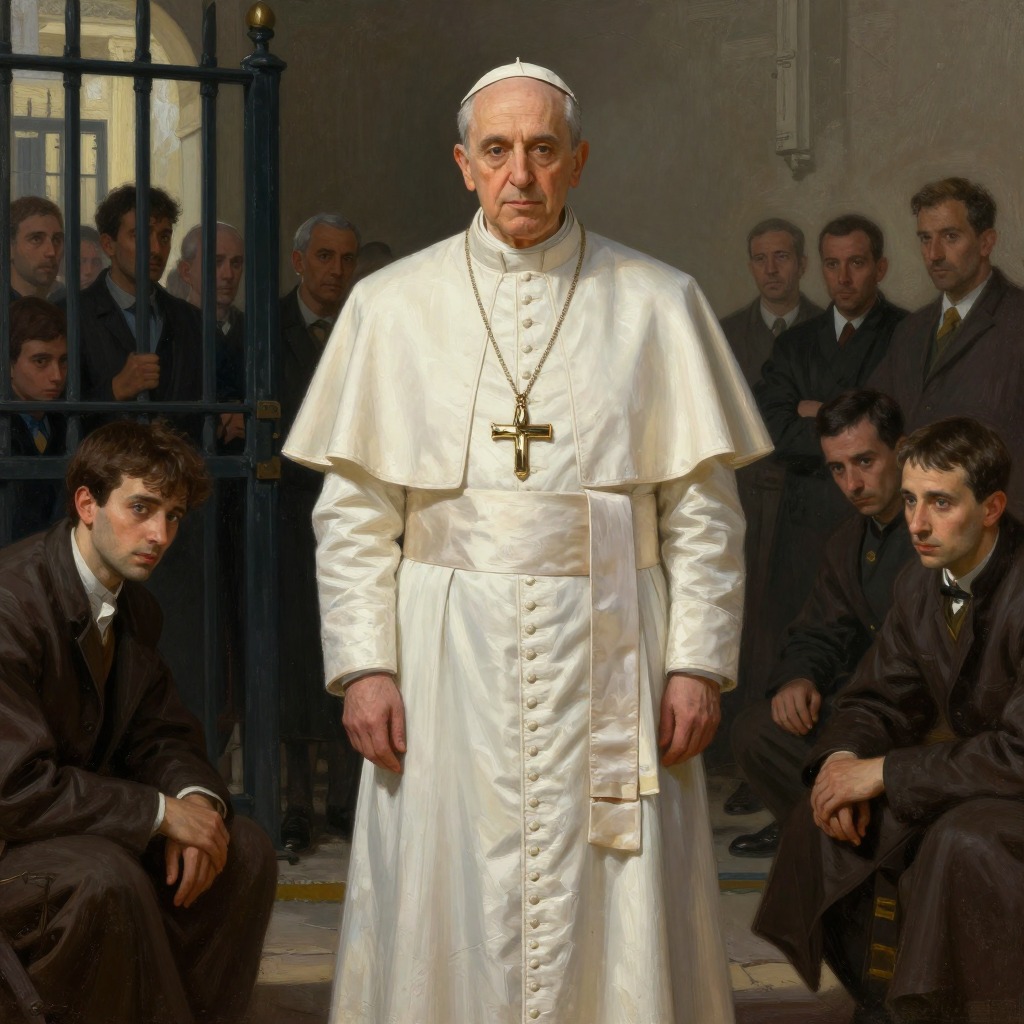
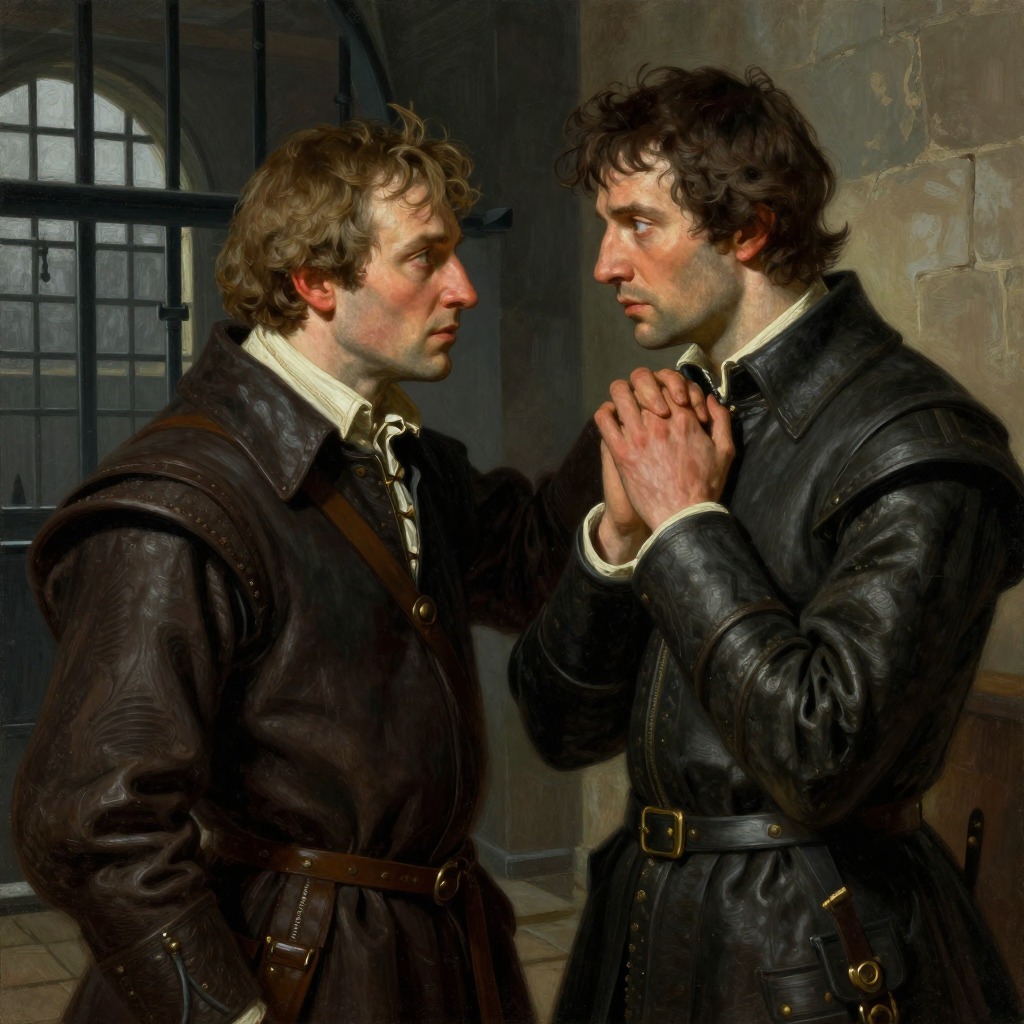
One day, under a tent that seemed to "drip molten lead," with about ten prisoners panting among the flies, Du Guesclin, bare to the waist, covered in sweat, and with a wild stare, began to drum on his ribs and declare the need for a new pope—one who would live among the wretched instead of praying on a throne. He insisted that this pope must be chosen from among the prisoners themselves, a complete man with all his vices and virtues, to whom they would swear allegiance on the sole condition that he keep alive the community of their sufferings. He then asked, "Who among us has the most failings?" As a joke, Clamence raised his hand, and was the only one to do so. Du Guesclin declared that this self-nomination presupposed the greatest virtue and proposed electing Clamence. The others agreed, half in fun but with a trace of seriousness, impressed by Du Guesclin's fervor.
Clamence's Pontificate and Du Guesclin's Death
Clamence exercised his pontificate for several weeks with increasing seriousness, acting as a group leader and administering to Du Guesclin's suffering. The big problem in the camp was the water allotment, and Clamence was led to favor his own comrades, making small concessions that he found far-reaching. He closed the circle of his moral compromise the day he drank the water of a dying comrade. Du Guesclin, however, was already dead by then, having stinted himself too much. Clamence notes that he loved Du Guesclin, or so it seemed to him, and that had Du Guesclin been present, he might have resisted longer out of love. Du Guesclin's death and Clamence's subsequent act of drinking the water of another dying man become for Clamence the founding moment of empires and churches "under the sun of death."